Unearthing the Gold Dust of Mechanistic Insight in Drug Discovery, with Deep Science & Deep Tech

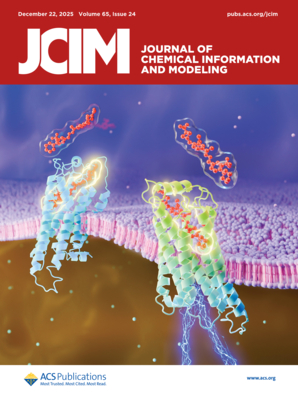
We’re pleased to share our study, “Selective Activation of GPCRs: Molecular Dynamics Shows Siponimod Binds but Fails to Activate S1PR2, Unlike S1PR1,” now published in ACS JCIM following peer review.
At its core, our study employs long-timescale molecular dynamics simulations, ensemble-level analysis, and switch-level reasoning to explain a clinically relevant phenotype: why Siponimod, despite binding tightly to S1PR2, fails to activate it. These tools allow us to move beyond static views of binding and into the dynamic, fine‑grained mechanisms that actually govern selectivity.
Why This Paper Matters More Now Than When We First Shared It
When we released the preprint explaining Siponimod’s selectivity across S1P receptors, the central message was already clear: selectivity is not always about whether a drug binds, but about what happens after it binds. What we did not fully emphasize then is just how rare—and valuable—such mechanistic clarity is. In drug discovery, mechanistic insight is closer to gold dust than to ore: difficult to extract, easy to overlook, and disproportionately valuable once found. Since then, the biopharma landscape has shifted in ways that make this kind of insight not just interesting—but foundational.
Two developments in particular change how this work should be read today.
1. GPCRs Are Back at the Center of Blockbuster Innovation
First, GPCRs have reasserted themselves as the engines of blockbuster innovation. The extraordinary success of GLP‑1–based therapies has reframed what “good pharmacology” looks like. Tirzepatide’s superiority over Wegovy is no longer explained in simplistic terms of potency or target engagement, but through intricate mechanistic behavior: partial and balanced receptor activation, signaling bias, and a tighter coupling between efficacy and tolerability. The industry has internalized a hard‑won lesson—how a receptor is engaged matters as much as which receptor is engaged.
2. Mechanistic Understanding Is Becoming a Regulatory Asset
Second, regulators are explicitly signaling that mechanistic clarity is becoming an evidentiary asset. In a recent New England Journal of Medicine Sounding Board, the FDA articulated a “plausible mechanism pathway” for situations where randomized trials are infeasible or limited. Central to this pathway is not just clinical observation, but biological congruence: a clear molecular abnormality, confident target engagement, and a mechanistically coherent link between intervention and outcome. In this regulatory framing, mechanism is no longer an explanatory afterthought—it is part of the case for action.
Against this backdrop, it is worth revisiting Siponimod. Not as a molecule that simply “avoids” S1PR2, but as a case study in how painstaking mechanistic work—enabled by deep science and deep tech—can unearth the fine-grained insights that truly explain selectivity in modern drug discovery.
When Active Sites Are Too Similar, Dynamics Do the Discrimination
S1PR1 and S1PR2 pose a classic medicinal chemistry challenge. Their active sites are highly similar in structure, and static comparisons offer little insight into why one receptor responds to Siponimod while the other does not. Traditional structure‑based reasoning would predict cross‑reactivity—and yet, clinically, Siponimod behaves as a selective modulator.
Our simulations show why. Siponimod binds strongly to the active site of S1PR2, with favorable thermodynamics and long residence time. The difference does not lie in occupancy, but in motion. Upon binding, Siponimod fails to stabilize the coordinated conformational changes—across transmembrane helices and intracellular loops—that define the active signaling state. In other words, when static structure runs out of explanatory power, dynamics step in.
This is a broader lesson for drug design. In target families with high homology, selectivity is increasingly encoded not in pocket geometry, but in how ligands reshape the receptor’s conformational ensemble over time. These effects are subtle, distributed, and dynamic—the very definition of mechanistic gold dust.
Transmission Switches Are the Real Selectivity Layer
GPCR activation is governed by conserved transmission switches—specific residues and motifs whose rearrangement propagates ligand binding into intracellular signaling. In S1P receptors, switches such as W6.48 and the TM5–TM6–TM3 triad are central to this process.
Siponimod stabilizes these switches in S1PR1, preserving an active‑like ensemble. In S1PR2, the same ligand leaves them largely in inactive or APO‑like orientations. The result is subtle but decisive: TM6 and TM7 drift toward conformations associated with deactivation, and the receptor fails to engage downstream signaling machinery.
From a design perspective, this reframes selectivity. What matters is not the presence of a single decisive interaction, but the cumulative effect of many small, coordinated shifts—exactly the kind of signal that is easy to miss without long-timescale simulations and ensemble-level reasoning. The critical question is no longer “does the ligand fit the pocket?”, but “does it engage the receptor’s internal communication network in the right way?” Transmission switches—not binding affinity alone—become the true arbiters of functional outcome.
Safety by Non‑Activation, Not Just Avoidance
Off‑target safety is often framed as a problem of exclusion: avoid binding the wrong receptors, and side effects will follow suit. Siponimod suggests a more nuanced strategy.
Despite binding S1PR2, Siponimod does not activate it. This decoupling of engagement from signaling offers a plausible mechanistic explanation for its improved safety profile relative to earlier S1P modulators. Rather than relying on absolute selectivity at the level of binding, Siponimod achieves functional selectivity by stabilizing non‑signaling states.
This idea resonates strongly with contemporary pharmacology. As seen in GLP‑1 biology and beyond, partial activation, biased signaling, and silent occupancy are emerging as deliberate design features—not liabilities. Safety, in this view, is engineered through controlled modulation, not complete disengagement.
Why Functional Assays Alone Are Not Always Enough
Standard functional assays collapse multiple mechanistic possibilities into a single readout. A lack of signaling could mean the ligand does not bind, binds weakly, dissociates quickly, or binds tightly but fails to induce activation.
Siponimod and S1PR2 fall squarely into the last category. Without dynamic, structural insight, this distinction remains invisible. Functional assays report the outcome, but not the cause.
As regulatory and scientific expectations shift toward mechanistic plausibility, this limitation becomes more consequential. Understanding why a signal is absent—not just that it is—matters for design decisions, safety arguments, and regulatory confidence.
A Case Study in Mechanistic Drug Discovery
Taken together, these findings illustrate a broader transformation underway in drug discovery. Mechanistic insight has always been valuable, but historically it was scarce precisely because it was so hard to obtain. Mechanistic insight is no longer a luxury reserved for post‑hoc rationalization. It is becoming a first‑class objective—informing candidate selection, de‑risking safety, and supporting regulatory narratives.
Siponimod’s behavior at S1PR2 is not an anomaly. It is an example of how deep science—careful biological framing—and deep tech—long-timescale molecular dynamics, ensemble analysis, and switch-level reasoning—can help unearth mechanistic gold dust that would otherwise remain buried. It is an example of dynamics‑driven selectivity, where binding, activation, and signaling are deliberately decoupled. As therapeutic ambitions expand toward personalized medicine, complex biology, and settings where traditional trials are constrained, such mechanistic clarity will only grow in importance.
The lesson is simple, but profound: in modern drug discovery, selectivity lives not just in structures, but in motions. And understanding those motions can make the difference between a molecule that merely binds—and one that truly works.